The friction
Want to work out? First, navigate six disconnected steps.
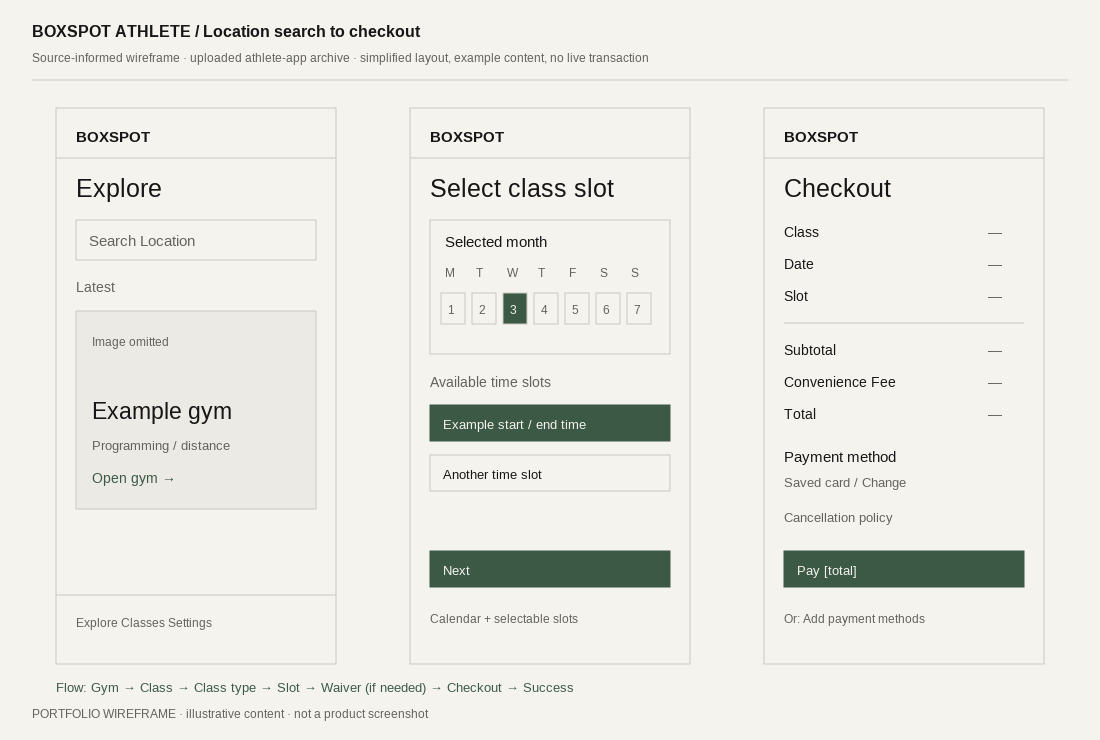
Imagine arriving in a new city and wanting to join a CrossFit class the following morning. You find a gym, check whether it accepts visiting athletes, figure out when a class is happening, contact the gym, complete a liability waiver, arrange payment, and confirm that somebody is expecting you.
The old process involved six distinct activities across emails, phone calls, paper forms, and conversations at the front desk:
- 01Find a gymCheck neighborhoods, affiliations, and whether the box welcomes visitors.
- 02Find a class timeCross-reference class schedules against your travel itinerary.
- 03Complete a waiverWait to fill out a liability form on paper at the front desk.
- 04Explain who you areExchange emails or introduce yourself to a coach before warm-up starts.
- 05PayHand over a credit card at the counter in between member check-ins.
- 06Confirm the bookingVerify in person that space actually remained in that class.
For athletes, the friction made something spontaneous feel unnecessarily complicated. For gyms, every visiting athlete introduced additional administrative work.
How could we make dropping into an unfamiliar gym as easy as booking a class on your phone—without adding work for the people running it?
Two-sided model
The challenge was bigger than booking a class.
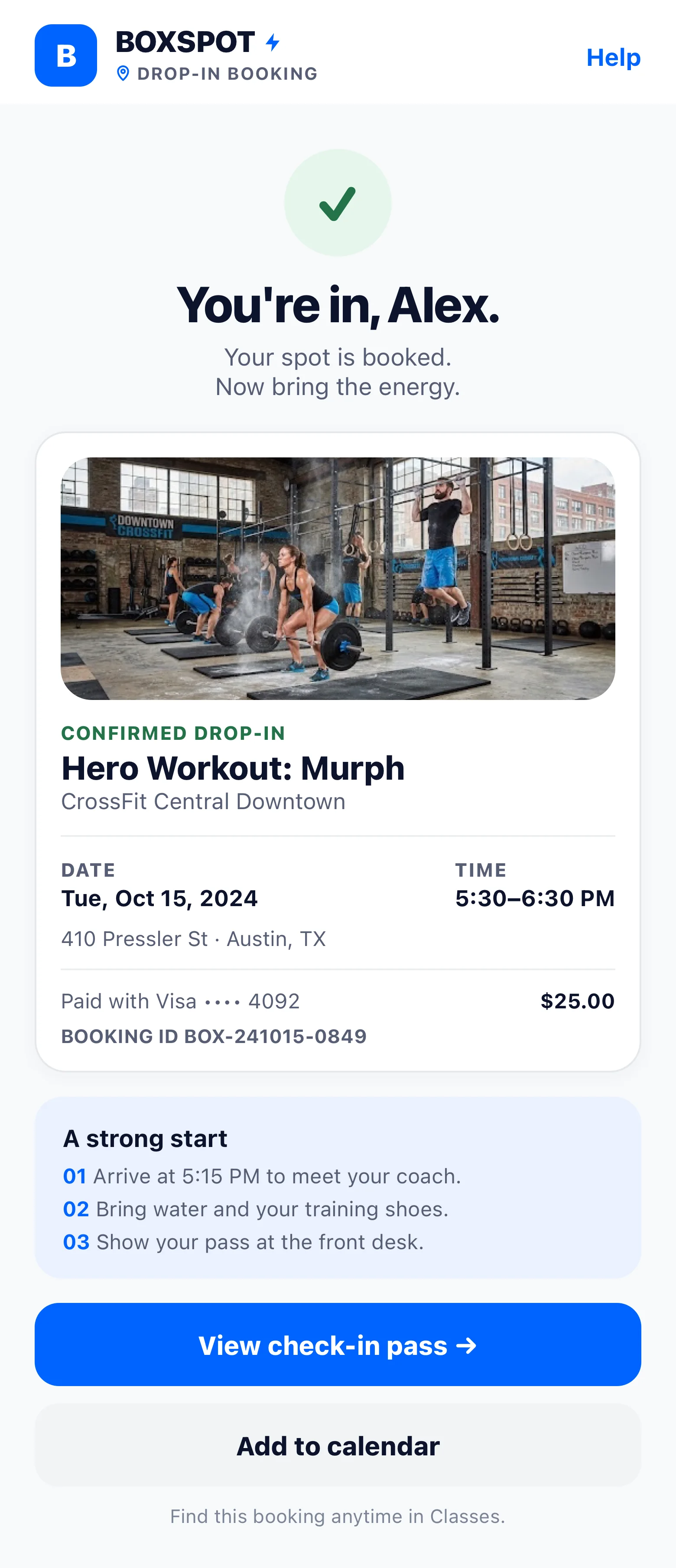
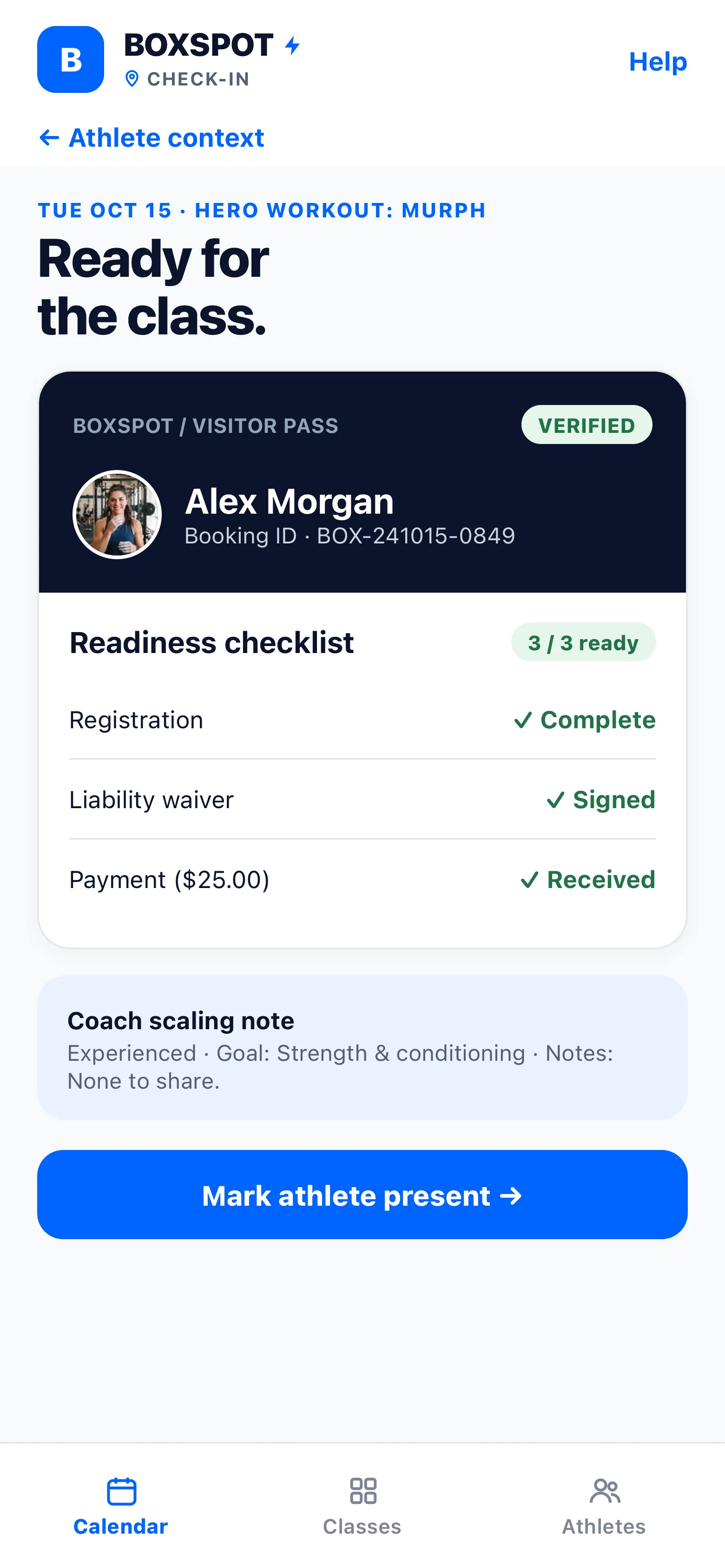
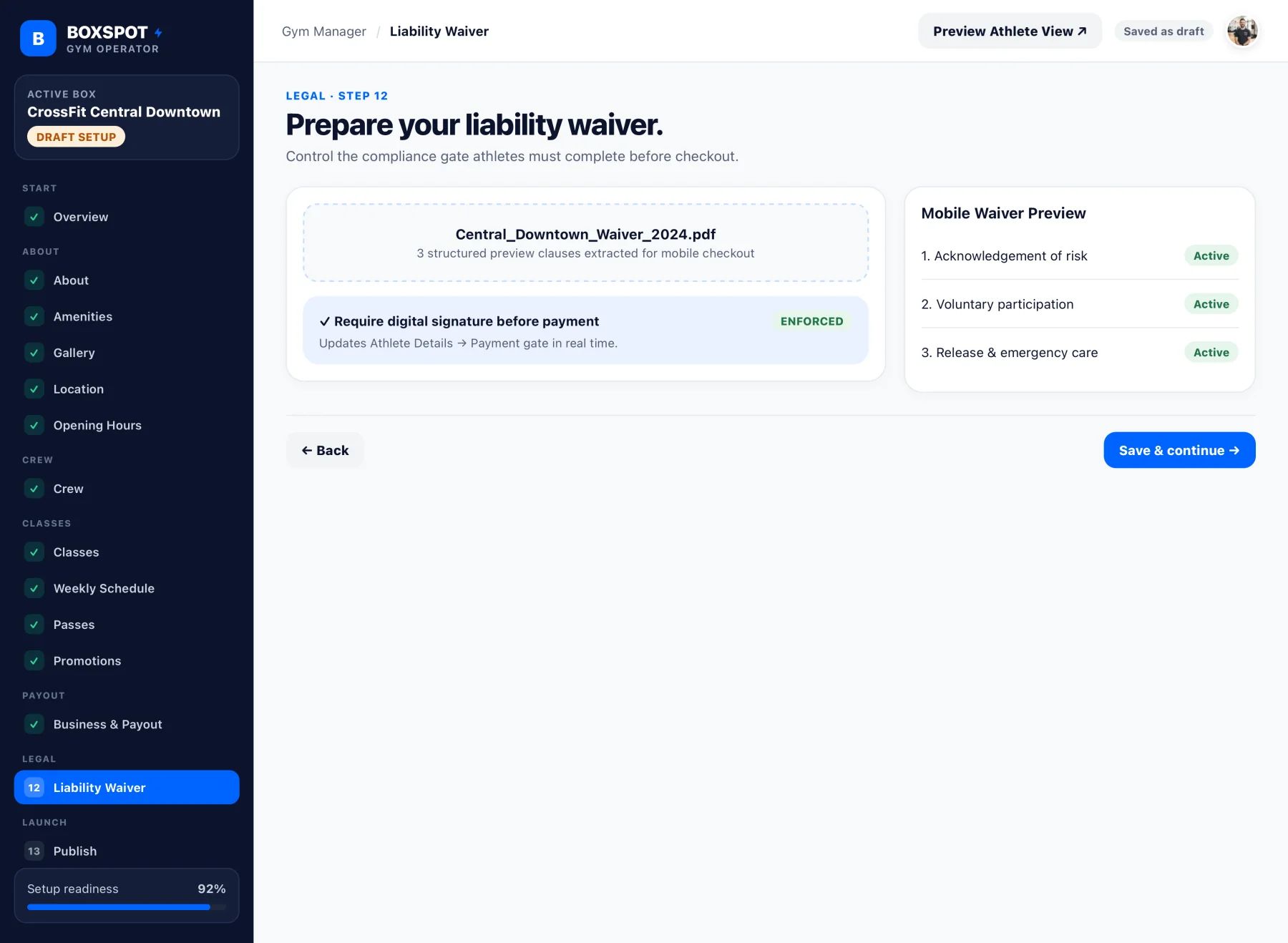
BOXSPOT was a two-sided marketplace, so designing for the visiting athlete meant designing just as carefully for the gym’s capacity, daily schedule, payment requirements, and check-in procedures.
A booking could feel quick to an athlete while still dumping manual verification on the front desk—or appear confirmed in an app while the gym lacked the signed waiver required to let them train.
The experience could only succeed when both sides shared the same understanding of a reservation.